Showing posts with label Mathura. Show all posts

Monday, 26 April 2021

The Shalbhanjikas of Mathura Museum

The Mathura Museum is like a candy store for kids who want a sugar rush. And for a newly minted imagehead like you, this is like a time portal where within few hours you can have an idea how iconography evolved over the past two thousand years from depiction of Mother Goddess in the Copper Age to the most scintillating Surya. You have not seen a better and more endowed museum in the country. And you are not even referring to the well-endowed resident Shalbhanjikas. 

Mathura as a city is as old as history. Dynasties have come and gone leaving their signs behind over the centuries. Some great archaeological efforts by stalwarts like Cunningham and the commissioning of the museum by Mathura Collector FS Growse has ensured that extensive excavations have been done in Mathura area and the finds lovingly displayed here.


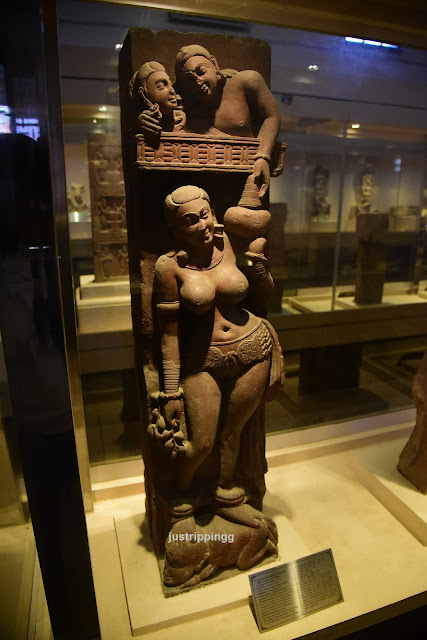
Salbhanjika from Bhuteshwar Mound in Mathura

There is so much to see here in the sculpture gallery, that it could take a week if you want to go over each exhibit, understand it, get a hang of the flow of time and dynasties and the evolution of style and iconography. And of course, these exhibits are further proof that North India was teeming with temples once upon a time, say, just like Odisha or Karnataka.

This brief post serves as the second part of the post you did on the Three Yakshis of Mathura that were taken to Calcutta’s Indian Museum by Cunningham.

Just like at Sanchi (few in-situ Salbhanjikas on the four torans) and Bharhut (the Stup Complex has been moved to Indian Museum), Mathura saw huge number of Salbhanjikas depicted on the Stupa complexes excavated in the Mathura and neighbouring areas. In the Mathura Museum there is a whole section dedicated to these ladies. Though the exhibits are encased in glass and photographing them takes real effort.

So, the post will not have much prose – it will be all photos of the lovely ladies.

There were Six Bhutesvara Shalabhanjikas of the Kushan period. Three are in Indian Musuem and three are in Mathura.


The Five Shalbhanjikas in Mathura during Growse time - the sixth one was already in Calcutta - two more (2nd and 4th) will be sent to Calcutta


Here the Shalabhanjika holds grapes in her right hand and raises a goblet of the finished product to the amorous couple on the top. 

The lady here is putting on her saree or skirt. It is Saturday night and a new discotheque has opened in town and she has all the intent on painting the town red tonite.

Going through your folder, you are disappointed that you missed clicking the third one. But it is okay - there is no way you will be able to see all that is exhibited in the museum in one go.

Here are the three ladies in the photo from Wiki


Now this is a different looking stone piece. This is a bracket part of a gateway found from Sonkh Tila in Govardhan dated 100 CE. The sculpture here to you looks more realistic. The sculptor has slightly reduced the voluptuosness making the shalbhanjika more real-life and that charming and desirable. The Serpent Hood in her anklet means she belongs to the Naga family.  


A Beautiful Description of a Salabhanjika exhibited in New York’s Met Museum

Tree Spirit Deity (Yakshi)1st–2nd century

India (Uttar Pradesh, Mathura region)

 On view at The Met Fifth Avenue in Gallery 235

This double-sided bracket (vrksadevata) for a gateway (torana) is decorated on either side with a tree-spirit deity known as a yakshi, who holds a flowering tree as a symbol of her fecundity. Her pose is that of salabhanjika ("breaking a branch of the sala tree"): grasping a branch, she thus engages with the fertility of the earth, bringing the tree into flower. Such figures provided an auspicious presence at the entrance to a sacred site.


Another sculpture from Bhuteshwar Mound - not part of the Group 6


Why are you not taking my calls?

Check your log, I have called you like 50 times since yesterday

I have been texting you – I can see you received the whatsapp messages – but why are you not reading them? Have you changed the settings? If you have read them why are the double ticks not blue?

Why are you so busy?

And who is that woman in the background? I can hear someone.

Your sister!

But you don’t have a sister!

Cousin sister?

Don’t lie to me.

Tell me now - where are you? I am coming over right now. I have had enough of you

Most women are nice. This one is jealous, obsessive, paranoid and psychotic with undiagnosed bipolar disorder.

Darpan-Dharini or is it Mobile-Dharini, Kushan, Maholi Village now being a nuisance in Mathura Museum


Usually the Shalbhanjika is shown coyly standing under the branches of a tree holding the branches. But then if you have Vitamin B12 Deficiency, holding the branches with your arms is a pain as it results in cramps, a medical condition called Pernicious Anemia. So, while the yakshi is put on a diet of proteins and milk, she has a job to do.

In such circumstances, the Yakshi kicks the trunk of the tree resulting in the tree growing leaves and flowering. This is called Ashoka-Dhohada. You are not sure if only the Ashoka trees get this preferential treatment at the hands…er…foot of Salbhanjika.  

Ashoka-Dhohada, Kushan Period, Provenance – Manoharpura, Mathura, now glass encased at Mathura Muesum


References

Centre for Art and Archaeology

https://vmis.in/ArchiveCategories/collection_gallery_parent/page:8?id=1335&siteid=0&minrange=0&maxrange=0&count=24

The Six Bhutesvara Yakshis

https://en.wikipedia.org/wiki/Bhutesvara_Yakshis 

Mathura – A District Memoir by F. S. Growse


Related Posts in this Blog

The Three Yakshis

The Scorpion Woman

The Vishnu of Mehrauli


If you liked the blogpost then

Please visit Justrippingg's Facebook Page for updates

Sunday, 30 April 2017

Trippingg Down the Memory Lane - Village Tripps

My father was born into a farmer’s family and before him his father. We belong to a farming community. We have always been tilling our lands. In the past, along with farming, we also fought with the assorted rulers ranging from Razia Sultan to the Mughals and the British. In Khushwant Singh’s words: “The Jat was born the worker and the warrior. He tilled his land with his sword girded round his waist.”
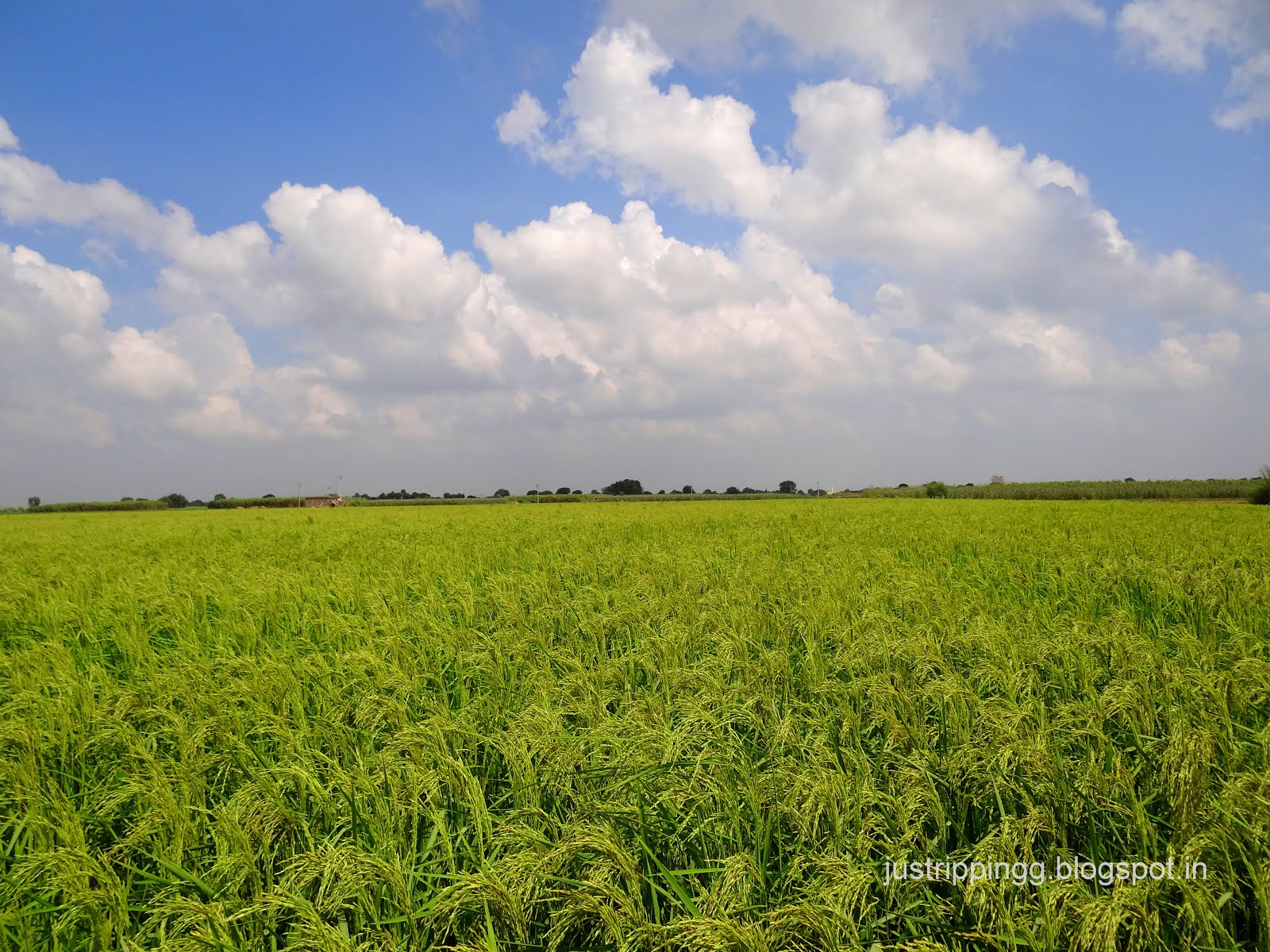
Sarson ke Khet - captured by my first digital camera - a point and shoot Olympus

Our worldly possessions were a pair of bullocks, a plough, few buffaloes and some land. Times changed. Youngsters aspired to move out of the villages. Families were large and the land holdings small. Armed forces and the police was the logical choice for the born warriors known for their courage and fortitude. Father too moved out of the village, stayed with relatives and got a college degree. Hopes of a big family and an entire village rested on him.


2017 is going to be bumper harvest
He eventually came to Delhi where he got his big break in Delhi Police. With time, he moved into the police quarters in Lutyens’ Delhi. We kids came along, born in perhaps the most elite address in whole of India – Chanakya Puri, house to pretty roads, embassies, cars with diplomatic plates and Chanakya theatre and Nirula’s!

Over the years, the village where Dad was born and where he grew up would keep pulling him back. He would visit his village whenever he could manage leave. Once a year we too made the trip. The summers would always make one of us sick. Instead of good times the trips turned into disasters. It was decided that now trips would be made in winters during the Christmas holidays.


A week before the trip an inland letter was posted to the village announcing our impending arrival. Dad usually was not part of these longish trips.We would wait for the mini bus (yes, these were private buses and for some reason were smaller than the usual DTC buses) at the corner of Sardar Patel Marg and Willingdon Crescent. The bus carrying the excited kids would lurch its way to the ISBT Kashmere Gate. To its credit ISBT then smelled as bad those days like it does now. Mom would drag us through the chaos looking for the stand where the roadways buses ply for Mathura.


The bus with Mathura / Agra sign pulls in and there is a mad scramble to get in. Bags and handkerchiefs are thrown through the windows to mark the seats. When the dust settles we had just managed to get ourselves a seat. Roadways bus journeys are a world onto themselves. Just as everyone is settling there is a sharp rap of knuckles on the metal ceiling of the bus. The bus falls silent. The performance begins. The salesman is selling candies – candies for kids, candies that will help you cope with motion sickness, candies for timepass and candies to gift your relatives. The sales pitch, the voice modulation is top-notch. Zig Ziglar would be proud - Product Price Place Promotion at its best. “Yes, of course you can try for free”.“Oh yes, since this is company scheme you get discount too”. “The orange candy is our best selling flavour and these are the last few packets left.”


At other times the salesmen would promise to get rid of your 20 year old kabz with this churan, fix that pyorrhea with just a rub of this powder, turn you into a bestselling upanyas writer with these pens and turn your kids into Picassos if they start practising in these colouring books. Once the salesman doubling up as a dentist pulled out a decaying teeth. The relieved patient finally smiled after days of agony. The customers fall over each other to lap up the assorted items. Kids hanker after their mothers for the candies. Just sit back and enjoy the show.

The UP Roadways bus tears through the highway amid mustard and wheat fields. Roasted peanuts smell mingles with the tang of oranges. Infants wail. Somebody has puked in the aisle - the candy apparently didn’t work. Bidi smoke wafts through the interiors of the bus.
At Mathura, we change the bus that would bring us closer to our village. Now these buses that run in the interiors of district are special. Bumping on rutted tracks the whole body would shudder, the window panes rattle as if hailstorms are raining on the roof, the engine would scream and the gears grind before dropping into the slot – a cacophony cocktail no Hollywood sound engineer can ever create. It was miracle that the bus did not disintegrate. There was some unseen superglue holding the entire contraption together. Mom has begun to glance out of the window periodically. She sees something and yells for the driver to stop.
Photo Credit - Mr. Ranbir Singh Phogat
India Post had delivered the letter. Our cousin brother is waiting by the roadside. The late model shiny wooden cart shod with wooden wheels sits gleaming under the winter sun while the bullocks graze nearby. The passengers look at our waiting ride with total envy. We tumble out of the still intact bus. Smiles and greetings are exchanged. Yes we have grown up since he last saw us. Bullocks are harnessed to the cart, bags are loaded, a sheet is spread and we grab our spots. Brother raises the stick, yells to the bullocks, pops the clutch ..er.. tugs at one of the tails and we are off.

From the mini bus few hours ago to two roadway bus rides and now to the bullock cart; the thrill continues. Brother decides to raise the thrill levels a notch higher. The cart is rolling through the narrow dirt track lined with high wild grass. “Robbers hide among the tall grass, waiting to pounce upon the passers-by.” We go very quiet –only the jingling bells of the bullocks providing some relief in the silence as we start seeing things in the grass.
The Yamuna Expressway - the faster option now!


The coming of cars ended the thrill and romance of travelling to the village. While in the past it would be few days trips, now it is mostly a one day return trip. Today you are travelling to attend the engagement of your cousin brother’s son. The Yamuna Expressway built to give competition to American freeways provide additional thrill of darting people across the lanes. Built of white concrete, the best expressway in India is a peephole into the changing roadscape across the country. Few kms on the smooth tarmac and you want to keep going to the end of the Indian peninsula.

Today you will get off at the Aligarh exit to dive into some village life on the way to the waiting ceremony. The last few kms on the broken service road provide some throwback to the days of yore.

Here is a Photo Journey – hope you enjoy it as much as I did.


The change from the smooth tarmac to the dusty broken service road is sudden - expressway on one side and fields on the other
The first bird sighting is the scruffy and fairly common altitudinal migrant Egyptian Vulture (Neophron percnopterus) feasting on a carcass by the side of the service lane
Look Dude, I don't give a flying crap if Yuvraj Donor has made hundreds of thousands babies. I, the Stud Baker has made millions of patties - now go beat that


Making dung cakes is a big part of village life - and the work is hard. Women of the villages spend long hours collecting the gobar, bringing it out to fields, patting it down, letting them dry, then making these little houses called Bittora with decoration and storing the upley or kandey that will last the whole year - like I said this is lot of work
You make a stopover at this field where potato harvesting is being done. A tractor with potato digger runs throught he field as kids and women collect the potatoes which are then graded and filled in bags. The potatoes will then go to cold storage to get better rates in the future.


The village pond or pokhar behind our house provides beautiful views with its birds and occasional sighting of snakes
The Common Moorhen (Gallinula chloropus) enjoying its day out
Now this is presumably uncommon winter visitor to Assam - really?! This is Spot-billed Duck (Anas poecilorbyncha) and there was a whole bunch of them here doing the birdie stuff they can do all day - balancing on one foot, preening themselves. These birds are like a non-stop self-service parlour. So the question is what were they doing in my village pokhar?!


Okay now over to the engagement party - neighborhood women come over to help out with the elaborate menu
This is just the snacks part to be followed by more elaborate snacks and then meal


DJ Truck arrives - abhi toh party shuru hui hai - jisko dance nahin aata woh jakar apni bhains chara le


The engagement ceremony


Sealed with some bidis
It is time to head back into the city again


Related links on this blog:
Mother's Childhood in Dholpur State

If you liked the blogpost then
Please visit Justrippingg's Facebook Page for updates

Please follow Justrippingg on Instagram